Athens itinerary: 3 to 5 days (2026 guide)
A realistic 3, 4, or 5 day Athens itinerary with the best sites, food, neighborhoods, and a day trip to Cape Sounion — structured by morning, afternoon, and evening.
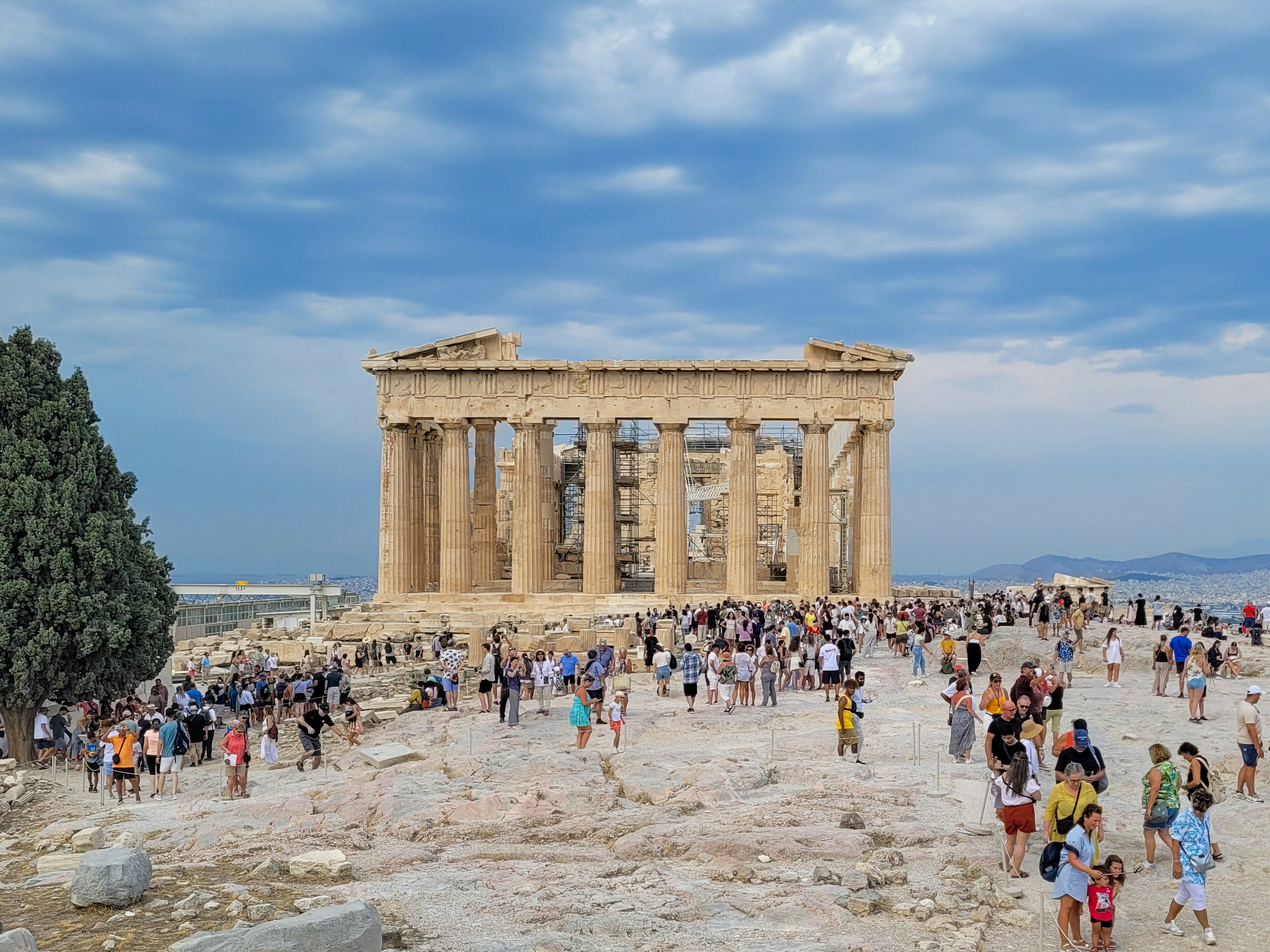
Three days in Athens is enough to fall in love with the city. Five days is enough to understand it. The difference is not just more time — it is a different kind of trip. Three days covers the essentials at a comfortable pace. Four days adds room for the experiences that make Athens feel personal rather than postcard-perfect. Five days lets you slow down, discover neighborhoods on foot, take a half-day trip to the coast, and leave feeling like you actually lived here for a week.
This itinerary is designed to work at any length. Days one through three form the core — the Acropolis, the historic neighborhoods, the food, the views. Day four adds the museum, market, and creative side of the city. Day five takes you outside Athens entirely, to one of the most spectacular ancient sites in Greece.
Every day includes where to eat, what to see, and how to get between stops. The schedule is realistic — no 6am starts, no rushed lunches, no cramming five museums into one afternoon. Athens rewards people who take their time, and this itinerary is built around that.
How to use this itinerary
Each day is structured as a morning, afternoon, and evening plan. You can follow it exactly or use it as a framework and adjust based on your energy, the weather, and what you discover along the way. Restaurant suggestions are real places, not invented names — but Athens changes quickly, so check that they are still open before making plans around a specific meal.
If you want a personalized version of this itinerary — adjusted for your exact dates, budget, and interests — the Athens.app AI trip planner will build one for you in seconds, with bookable tours and hotel suggestions included.
Not sure which neighborhood to base yourself in? Start with our complete guide to where to stay in Athens, or if you are traveling with a partner, the couples guide covers the most romantic options. For help deciding on accommodation at your price point, our hotels by budget guide breaks down what your money buys at every level.
Day 1 — The Acropolis, Plaka, and your first Athenian evening
Your first day should do one thing well: give you the view that makes every other day make sense. The Acropolis is not just the top attraction in Athens — it is the reference point for the entire city. Once you have stood on that rock and looked out over everything, every neighborhood, every ruin, every rooftop bar you visit afterward clicks into place.
Morning — the Acropolis
Get there early. The site opens at 8am from April through October, and the difference between arriving at 8am and arriving at 10am is the difference between a peaceful, almost private experience and shuffling through crowds in direct sun. If you are visiting in summer, early morning is not optional — by 11am the marble reflects heat that makes the visit physically uncomfortable.
Buy your ticket online in advance or, better still, book a guided tour. The Acropolis without a guide is impressive but confusing — you are looking at structures that span a thousand years of construction, destruction, and reconstruction, and without context you miss most of what makes them extraordinary. A good guide turns a ninety-minute walk into one of the best history lessons you will ever have.
After the Acropolis, walk directly to the Acropolis Museum. It is five minutes downhill and it houses the sculptures, friezes, and artifacts that were removed from the monuments. The top-floor gallery — with the Parthenon frieze displayed at the same orientation as the original building, visible through the glass walls — is one of the great museum experiences in Europe. Allow ninety minutes.
Afternoon — Plaka and Anafiotika
Walk into Plaka for a late lunch. The neighborhood sits directly below the Acropolis, and after a morning on the rock, descending into its narrow streets feels like arriving somewhere that has been waiting for you. Avoid the restaurants on Adrianou Street — they are tourist traps with laminated menus and aggressive hosts. Instead, walk one or two blocks off the main drag and look for places where Greeks are eating.
After lunch, explore Anafiotika — the hidden cluster of whitewashed houses on the north slope of the Acropolis. It was built in the 19th century by workers from the island of Anafi, and it looks and feels like a Cycladic village dropped into the middle of a capital city. The streets are so narrow and quiet that most visitors walk right past the entrance without realizing it is there. It is one of the most photographed spots in Athens, and it deserves to be.
Walk through the Roman Agora and Hadrian's Library on your way toward Monastiraki Square. These are smaller archaeological sites that are included in the combined Acropolis ticket and worth twenty minutes each — just enough to appreciate the layers of history without museum fatigue setting in.
Evening — Monastiraki sunset and dinner
End your first day at the best free viewpoint in Athens: Areopagus Hill (Mars Hill), the rocky outcrop just below the Acropolis entrance. Get there thirty minutes before sunset, find a spot on the rocks, and watch the light change over the city. The Agora ruins spread out below you, the modern city stretches to the sea, and the Acropolis glows behind you. It is the single best sunset in central Athens and it costs nothing.
Walk down to Monastiraki for dinner. The square is at its most atmospheric in the evening — the old mosque is lit up, the flea market stalls are closing, and the restaurants in the surrounding streets are filling up. For your first night, eat somewhere simple and traditional — grilled meat, fresh bread, a Greek salad with tomatoes that taste like tomatoes are supposed to taste, and a carafe of house wine.
Day 2 — The Ancient Agora, food markets, and the neighborhoods
Day two takes you deeper. You have seen Athens from above — now you walk through it at street level, through the places where Athenians actually lived, shopped, argued, and ate, both in antiquity and today.
Morning — the Ancient Agora
The Ancient Agora is the most underrated major site in Athens. It was the heart of ancient Athenian life — the marketplace, the law courts, the gathering place where Socrates debated and democracy was practiced for the first time. Unlike the Acropolis, which is a monumental hilltop, the Agora is a green, tree-shaded site that feels like a park with ruins in it. The Stoa of Attalos — a fully reconstructed ancient covered marketplace — now houses a museum of everyday Athenian objects that brings the ancient city to life in a way that monumental sculpture cannot.
Allow ninety minutes. The Agora is included in the combined Acropolis ticket. Morning light here is beautiful, especially in the olive groves around the Temple of Hephaestus — the best-preserved ancient Greek temple in existence.
Afternoon — Central Market and food tour
Walk from the Agora through Monastiraki toward the Central Market (Varvakios Agora) on Athinas Street. This is not a tourist market — it is where Athenian restaurants buy their fish, meat, cheese, and olives. The fish hall is spectacular and chaotic. The meat market is not for the squeamish. The surrounding streets are lined with spice shops, dried fruit vendors, and bakeries that have been operating for generations.
If food is important to your trip — and in Athens it should be — this is the day for a guided food tour. Walking through Monastiraki and the Central Market with someone who knows the vendors, the history, and the best things to taste transforms an interesting walk into an unforgettable one.
Evening — Psyrri and live music
Psyrri comes alive in the evening. The neighborhood is five minutes from Monastiraki Square but feels entirely different — street art on every wall, small bars with mismatched furniture, and tavernas where live rebetiko music starts around 10pm. Rebetiko is the Greek blues — raw, emotional, and best heard in a small room with a glass of tsipouro and a plate of meze.
For dinner, look for a traditional taverna in the streets between Monastiraki and Psyrri. Order meze style — multiple small plates shared between you. Grilled octopus, fava (yellow split pea dip), saganaki (fried cheese), stuffed vine leaves, and whatever the kitchen recommends. This is how Greeks eat, and it is the best way to try as many flavors as possible in one meal.
Day 3 — Koukaki, Filopappou Hill, and rooftop Athens
Day three shifts pace. You have covered the essential history and the food — now you experience Athens as a city to live in, not just visit. This is the day that makes you think about coming back.
Morning — Koukaki coffee and Filopappou Hill
Start in Koukaki, the neighborhood south of the Acropolis that locals recommend more than any other for visitors. Walk its tree-lined residential streets, get coffee at one of the specialty cafes that have made this area the best coffee neighborhood in Athens, and settle into the pace of a place that feels like it belongs to you rather than to tourists.
From Koukaki, walk up Filopappou Hill — the pine-covered hill directly south of the Acropolis. The path winds through trees and wildflowers, past the Philopappos Monument at the summit, and opens onto a panoramic view that includes the Acropolis, the Agora, Lycabettus Hill, the city spreading to the coast, and on clear days, the islands of the Saronic Gulf. This is a better viewpoint than Areopagus — less crowded, more peaceful, and surrounded by nature rather than rock.
The walk takes thirty minutes at a gentle pace. Bring water — there is no shade at the top, and in summer the sun is direct.
Afternoon — Kolonaki and Lycabettus Hill
Take the metro or walk to Kolonaki — Athens at its most polished. The neighborhood sits on the slopes of Lycabettus Hill and is where Athenians come for brunch, gallery visits, and the kind of shopping that involves Greek designers and independent jewelers rather than souvenir shops.
If you have the energy, walk or take the funicular to the top of Lycabettus Hill. The 360-degree view from the summit — with the Acropolis, the sea, and the mountains all visible at once — is the most complete panorama available in the city. The cafe at the top is overpriced but the view is free. Late afternoon light here is exceptional.
Evening — Rooftop bar crawl
Athens has the best rooftop bar scene of any European capital, and tonight is the night to explore it. The combination of warm evenings, Acropolis views from every angle, and cocktails that cost €10–14 (half the price of equivalent bars in London or Paris) makes this one of the best nights out the city has to offer.
Start at a bar in Monastiraki for the direct Acropolis view, then move to one or two more in Psyrri or Syntagma. Each rooftop offers a slightly different angle on the same monument, and watching the Parthenon from different vantage points as the evening progresses is the kind of experience that defines a trip.
For the best version of this, a guided rooftop bar crawl takes the logistics out of it — someone else chooses the bars, handles the reservations, and makes sure you see the Acropolis from every angle that matters.
Day 4 — The National Archaeological Museum, street art, and the deeper city
If you have a fourth day, Athens opens up considerably. The pace shifts from "must-see" to "want-to-see" — and these are often the experiences you remember most.
Morning — National Archaeological Museum
The National Archaeological Museum is one of the most important collections of Greek antiquities in the world, and it sits on the edge of Exarchia, the most counter-cultural neighborhood in Athens. The museum alone justifies a fourth day — the Mycenaean gold, the bronze sculptures, the frescoes from Santorini — but it also serves as a gateway to a part of Athens most short-stay visitors never see.
Allow two to three hours. The museum is large and the collection is extraordinary. Focus on the Mycenaean hall (room 4) and the bronze collection rather than trying to see everything. Early morning is quietest.
Afternoon — Exarchia and the creative side
Walk from the museum into Exarchia. This is Athens at its most raw — street art covering every surface, independent bookshops and record stores, anarchist cafes next to the best cheap tavernas in the city. It is not polished, it is not comfortable in the conventional sense, and that is exactly why it is worth visiting.
Lunch in Exarchia is some of the best value in Athens. Traditional tavernas serve meals for €8–12 per person, with wine from the barrel and portions designed for people who work for a living. The food is honest — grilled meats, stewed vegetables, fresh bread, and no attempt to be anything other than what it is.
If street art interests you, walk the streets between the Polytechnic University and Strefi Hill. The murals here are large-scale, political, and constantly changing. Exarchia has been the creative and activist heart of Athens for decades, and the walls tell the story.
Evening — Gazi and dinner
Walk or take the metro to Gazi — the former gasworks district turned nightlife and arts area. The Technopolis complex hosts exhibitions and events in the restored industrial buildings, and the surrounding streets are lined with restaurants and bars that skew younger and more creative than the historic center.
Dinner in Gazi is modern Athenian cooking — neo-tavernas that take traditional recipes and update them with better technique and presentation, without losing the soul of the food. This is where chefs who trained abroad come back to cook, and the results are some of the best meals in the city at mid-range prices.
Day 5 — Cape Sounion and the Temple of Poseidon
If you have five days, leave Athens for an afternoon. Cape Sounion — the rocky headland at the southern tip of Attica, seventy kilometers from the city — is where the Temple of Poseidon stands on a cliff above the Aegean Sea. It is one of the most dramatic ancient sites in Greece, and watching the sunset from the temple steps is an experience that belongs in a different category from anything you can do in the city.
Morning — slow morning and packing
After four days of walking, give yourself a slow morning. Sleep in, have a long breakfast at your hotel or a neighborhood cafe, and pack for the afternoon trip. If you have energy, revisit a neighborhood you particularly liked — a second visit to a place you have already discovered always reveals something new.
Afternoon — Cape Sounion
The drive to Cape Sounion takes about ninety minutes along the Athens Riviera coast road — one of the most scenic drives in Attica, passing beaches, small harbors, and the affluent coastal suburbs south of the city. The temple itself is a Doric structure from 444 BC, perched on a cliff sixty meters above the sea. Only fifteen of the original thirty-four columns remain, but the setting makes it feel more complete than it is.
The best way to visit is on a half-day guided tour that includes hotel pickup, the coast road drive, time at the temple, and return to Athens. Timing the visit for sunset is the key — the temple faces west over the Aegean, and watching the sun drop into the sea between the columns is one of the most photographed moments in Greece for good reason.
Evening — final dinner in Athens
For your last evening, go back to the neighborhood that felt most like yours. If Plaka charmed you on day one, return for dinner. If Psyrri's live music stayed with you, go back. If Koukaki's quiet streets felt like home, eat there.
Order the things you discovered during the trip — the dishes, the wines, the meze combinations that worked. Athens rewards return visits, even when the return is just to a restaurant you ate at three days ago. The last dinner should feel like a full circle, not a farewell.
Practical information
Getting around
Athens is a walking city. The historic center — Plaka, Monastiraki, Psyrri, Koukaki, Kolonaki — is compact enough that you can walk between neighborhoods in fifteen to twenty minutes. The metro is excellent for longer distances (Syntagma to Piraeus, city center to the National Archaeological Museum) and costs €1.20 per trip. Taxis are cheap by European standards — a ride across the city center rarely exceeds €5–7.
Best time to visit
April through June and September through October are the best months. Temperatures are warm (20–28°C), the light is extraordinary, and the city is busy but not overwhelming. July and August are hot (35°C+) — manageable if you schedule around midday heat, but less comfortable for walking. November through March is quiet, affordable, and mild — Athens rarely drops below 10°C, and the lack of crowds makes museums and restaurants more enjoyable.
Budget overview
A comfortable mid-range trip for two — four nights of accommodation, meals, transport, and two or three paid experiences — costs €700–1,200 total, not including flights. Athens is 30–50% cheaper than comparable European capitals for equivalent quality. For a detailed breakdown by budget level, see our hotels by budget guide.
What to book in advance
Book your accommodation early, especially for April through June — the best-reviewed properties fill up weeks ahead. Book the Acropolis guided tour in advance — popular time slots sell out. Food tours also fill up, particularly for weekend dates. Everything else can be decided on the ground.
Customize this itinerary
This guide gives you the framework — but every trip is different. Your dates, your budget, your interests, and your pace all change what the best version of Athens looks like for you. The Athens.app AI trip planner takes your specific details and builds a personalized day-by-day itinerary with restaurant suggestions, tour bookings, and hotel recommendations that match your preferences.
It takes thirty seconds and it is free.
Ready to build your personalized Athens itinerary? Start planning →
Ready to plan your Athens trip?
Use the Athens.app AI planner to build a personalised itinerary based on your dates, interests, and budget.
Plan my trip