Where to eat in Athens: a neighborhood-by-neighborhood guide
From hole-in-the-wall tavernas to refined dining. Every budget, every craving, every neighborhood covered.
How to eat in Athens
Athens is one of the best food cities in Europe — not because it has the most Michelin stars or the trendiest restaurants, but because the baseline quality of everyday food is remarkably high. A €3.50 souvlaki wrap from a side-street shop can be one of the best meals of your trip. A €10 plate of grilled octopus at a neighborhood taverna can rival anything you would pay three times as much for in Rome or Barcelona.
This guide covers the best neighborhoods for eating in Athens, what to look for, and how to avoid the tourist traps that cluster around every major attraction.
The golden rule
Walk one block away from any main tourist street. Prices drop, quality rises, and you find the places where Athenians actually eat. This applies everywhere — Plaka, Monastiraki, Syntagma, the Acropolis area. The restaurants with photos on the menu and staff trying to wave you in from the sidewalk are almost never the best option.
Plaka and Anafiotika
Plaka gets a bad reputation among food-focused travelers, but it is not entirely deserved. Yes, the restaurants lining the main pedestrian streets of Adrianou and Kydathineon are overpriced and mediocre. But step into the quieter side streets — particularly around the upper part of Plaka near Anafiotika — and you find small, family-run tavernas with genuine home-style cooking.
Look for places with handwritten daily specials, limited menus, and tables squeezed onto narrow sidewalks. The dish to order in this area is anything slow-cooked — lamb with potatoes, stuffed tomatoes, or stewed green beans in tomato sauce. These are the dishes that Athens grandmothers have been making for decades, and the best Plaka tavernas still cook them properly.
Breakfast in Plaka is best at one of the bakeries. Cheese pies, spinach pies, and bougatsa — a flaky pastry filled with custard cream — are all excellent and cost €2–4. Pair with a Greek coffee and sit on a quiet square watching the neighborhood come to life.
Monastiraki
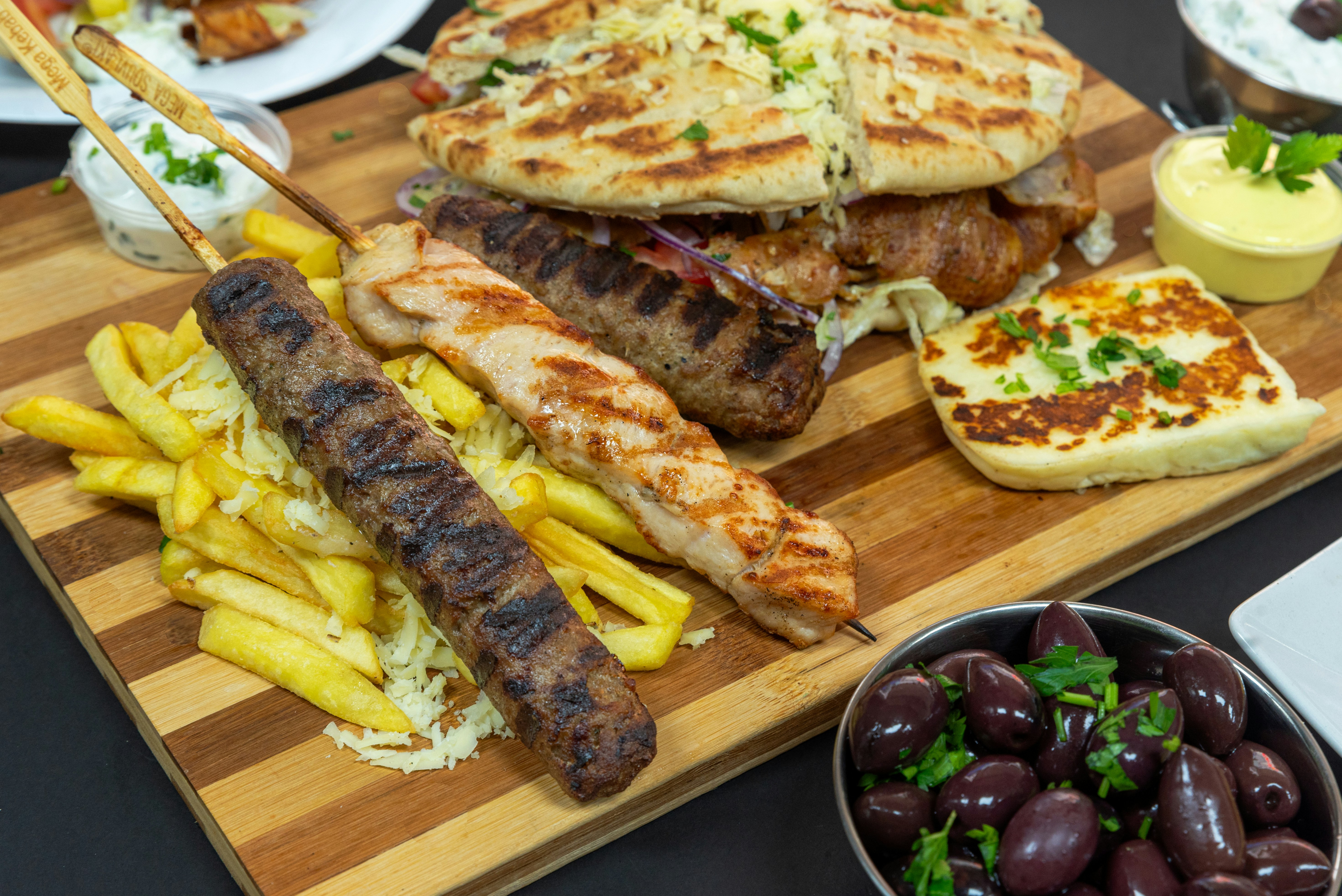
Monastiraki is souvlaki territory. The concentration of souvlaki shops around Monastiraki Square and Mitropoleos Street is intense, and the quality is generally high. A pork souvlaki wrap — grilled meat, tomato, onion, tzatziki, wrapped in warm pita with fries tucked inside — is the definitive Athens street meal. It costs €3–3.50 and it is filling enough to count as a full lunch.
The debate over the best souvlaki in Athens is endless and fiercely contested. Rather than picking a winner, try a few different shops and form your own opinion. Look for places where the meat is grilled to order — not sitting on a warming tray — and where the pita is warm and slightly charred.
Beyond souvlaki, Monastiraki is home to the Central Market — the Varvakios Agora. This is not a tourist market. It is a working wholesale market where Athenians buy meat, fish, and produce. The atmosphere is raw and chaotic, the best kind of travel experience. The small tavernas inside and around the fish market serve excellent grilled fish at very reasonable prices. Lunch here feels like eating in a different era.
Psyrri
Psyrri has transformed from a working-class neighborhood into one of Athens' most interesting dining areas. The streets around Iroon Square are packed with mezze restaurants, wine bars, and small plates joints that fill up after 9pm and stay busy until midnight.
This is the neighborhood for mezze — the Greek tradition of ordering many small dishes to share. Dips, grilled halloumi, fried courgette balls, octopus, saganaki cheese — order four or five plates for the table, add a carafe of house wine, and you have one of the best meals in Athens for €12–15 per person.
Psyrri is also where you will find Athens' live rebetiko scene. Rebetiko is sometimes called the Greek blues — soulful, raw music that grew out of the refugee communities of the 1920s. Several small venues in Psyrri host live rebetiko with no cover charge. Order meze and wine, and let the music carry the evening. It is one of the most authentically Athenian experiences you can have.
Koukaki
Koukaki is the neighborhood that Athens food lovers return to. It sits just south of the Acropolis Museum and has the highest concentration of quality, locally oriented restaurants in central Athens. The key difference from Plaka or Monastiraki: Koukaki is where Athenians go out to eat, not where tourists are steered.
The stretch along Drakou Street and Veikou Avenue has everything from specialty coffee shops to brunch spots to traditional tavernas. Prices are moderate and the quality is consistently high because these places survive on local regulars, not tourist footfall.
For dinner, look for tavernas offering daily specials — this usually means the food is fresh and seasonal. Grilled fish priced by weight is common in Koukaki and excellent value compared to touristy fish restaurants near the port.
Exarchia
Exarchia is Athens at its most affordable and most chaotic. This is the student and artist neighborhood — politically charged, covered in street art, and home to some of the cheapest and most generous food in the city.
Tavernas in Exarchia serve enormous portions at prices that feel almost absurdly low. A full meal — large salad, main course, bread, and a beer — can cost €8–10 per person. The food is not refined but it is honest, filling, and cooked with care.
The area around Exarchia Square and the streets leading to Strefi Hill have the best concentration of affordable restaurants. Many are cash-only and do not appear on tourist review sites — which is part of their charm.
Exarchia is also where you will find some of the best independent coffee shops in Athens. The neighborhood takes coffee seriously, and the specialty coffee scene here rivals any in Europe.
Kolonaki
Kolonaki is Athens' upscale neighborhood, set on the slopes of Lycabettus Hill. The dining here is more polished and more expensive — but not outrageously so by European capital standards.
This is where you come for a special dinner or a long weekend brunch. The restaurants around Kolonaki Square serve refined versions of Greek classics alongside international cuisine. Expect to spend €25–40 per person for dinner with wine.
The real Kolonaki experience is the cafe culture. The square is lined with cafes where well-dressed Athenians spend hours over espresso. It is expensive by Athens standards — a coffee might cost €4–5 — but the people-watching is unmatched.
Pangrati
Pangrati is the neighborhood that food-focused travelers are starting to discover. Located behind the Panathenaic Stadium, it feels more residential and less touristy than anywhere else on this list.
The dining scene here skews modern — natural wine bars, contemporary Greek cuisine, small-plate restaurants that would not feel out of place in East London or Brooklyn. But the prices remain Athenian, not international. Dinner for two with wine runs €40–60, which would buy you a single main course in many Western European capitals.
Pangrati is also home to the Varvakeios Municipal Market's smaller sibling markets and several excellent bakeries. Come here for lunch or dinner if you want to eat like an Athenian who cares about food but does not want to be seen trying too hard.
What to eat: the essentials
Every visitor to Athens should eat these dishes at least once:
Souvlaki — the pork wrap is the classic. Chicken is also excellent. Order it apo ola — with everything.
Moussaka — layers of aubergine, potato, minced meat, and bechamel. When it is good, it is transcendent. When it is bad, it is school cafeteria food. Choose your restaurant carefully.
Greek salad — called horiatiki. Tomato, cucumber, onion, peppers, olives, feta, olive oil. No lettuce. The quality depends entirely on the tomatoes, so this is best in summer.
Grilled octopus — charred on the outside, tender inside. Order it with a squeeze of lemon and nothing else.
Saganaki — fried cheese. Often served flamed at the table. It is exactly as good as it sounds.
Spanakopita — spinach and feta wrapped in flaky filo pastry. The best versions come from bakeries, not restaurants.
Loukoumades — small fried dough balls drizzled with honey and cinnamon. The Greek version of a doughnut, and the perfect afternoon snack.
Freddo espresso or freddo cappuccino — the Greek iced coffee. Not a tourist drink — this is what Athenians actually drink, year-round. Order it and you will understand why.
When to eat
Athens runs on a different clock than northern Europe. Lunch is served from 1pm to 3pm. Many restaurants close in the late afternoon and reopen for dinner service at 8pm or later. Do not expect tables to fill before 9pm — Greeks eat late, and the best atmosphere arrives after 10pm.
If you arrive at a restaurant at 7pm, you will be eating alone. By 10pm, the same restaurant will be packed, loud, and full of energy. Adjust your schedule accordingly — it is worth it.
The food tour question
A guided food tour is one of the best investments a first-time Athens visitor can make. Not because you cannot find good food on your own — you can — but because a good guide takes you to places you would walk past, explains what you are eating, and gives you the confidence to order adventurously for the rest of your trip.
The best Athens food tours focus on the Central Market area, Monastiraki, and the side streets of Psyrri. They typically include six to eight tastings and last three to four hours. Budget €50–70 per person and treat it as both lunch and an education.
Final advice
The best meal you eat in Athens will probably not be the most expensive one. It will be the souvlaki you grab from a side-street shop after a long morning at the Acropolis, or the shared mezze plates at a Psyrri taverna where the waiter brings you things you did not order because he thought you should try them.
Athens feeds you generously, honestly, and affordably. Trust the neighborhoods, avoid the tourist traps, and eat where the locals eat. That is the only food guide you really need.
Ready to plan your Athens trip?
Use the Athens.app AI planner to build a personalised itinerary based on your dates, interests, and budget.
Plan my trip